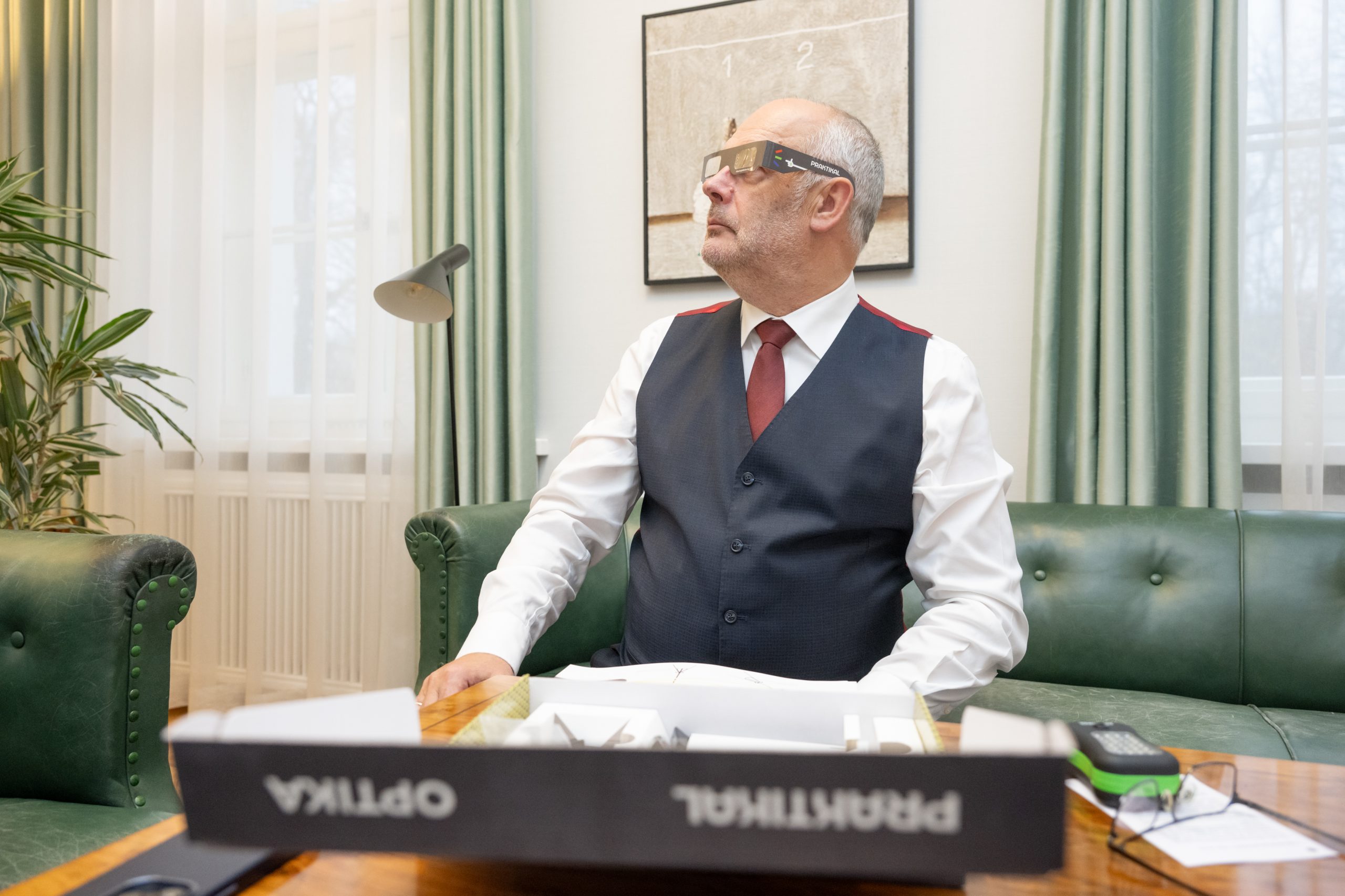

Her students were enthusiastic about the experiment. They mixed chemicals, observed the colour change and were amazed at the sparks that jumped between the electrodes. The lesson felt alive. Then came the test the following week and the application knowledge had disappeared. The spectacle stuck. The science did not.
If this sounds familiar: you are not alone. And the problem is not yours. The phenomenon even has a technical term:
The spectacle trap
Learners remember what they learnt in the lab done have. You remember the prism that splits white light into a rainbow, the hiss of a reaction, the moment when the light bulb finally lit up. But ask, Why the light has split, what has driven the reaction or like the circuit works - and you get blank stares.
Abrahams and Millar (2008) investigated precisely this discrepancy in a broad-based study and found that it occurs systematically. Learners were able to reliably reproduce the observable events of an experiment - everything they could see, hear and touch - but failed to link these observations to the scientific concepts that the experiment was intended to convey. These were not isolated cases of poor teaching. It was a pattern that was inherent in the structure of the practical work itself.
Abrahams (2009) went one step further and showed that even teachers who considered their practical lessons to be effective achieved engagement primarily at the level of physical action. Learners followed steps, handled equipment, noted readings - but did not think about the underlying science. Their hands were busy. The head was not.
This is precisely the spectacle trap: the more impressive an experiment, the more likely it is that learners will remember the spectacle - and forget the actual learning content.
Why traditional practice work does not work
The basic problem is simple. In most classical laboratory lessons, the experiment becomes detached from the theory it is supposed to illustrate.
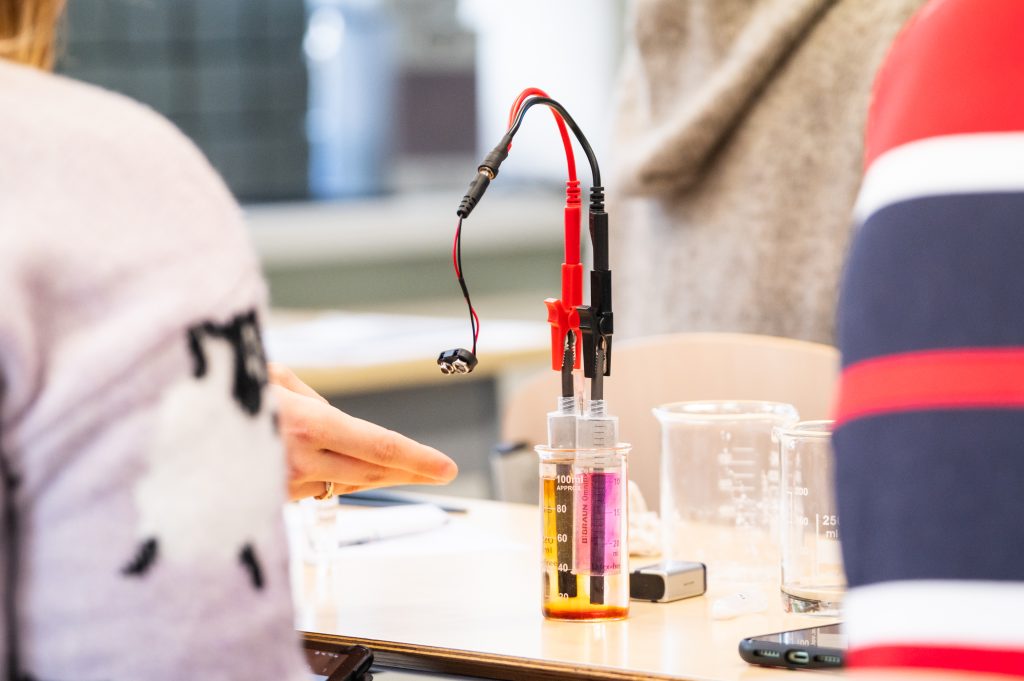
Imagine a typical practical lesson. The learners are given a worksheet. It says: pour 50 ml of this solution into a beaker, add three drops of that substance, measure the temperature, note the value. They follow the recipe. You get a result. They move on to the next task.
At no time did they have to Think scientifically. They did not hypothesise. They did not make a prediction. They did not ask themselves what would happen if they changed something. They followed instructions - carefully, even conscientiously - but the cognitive work of science did not take place.
The interest they felt is what research calls situational interest (Christidou, 2011). It is triggered by the novelty of the environment - the equipment, the smells, the social dynamics of group work. This kind of interest is real, but also fragile. It ends with the break bell. It does not follow the learners home and rarely survives until the next lesson.
In order to turn situational interest into a permanent individual interest If a learner's interest is to be aroused - the interest that leads to someone taking a science elective or picking up a physics book on their own initiative - something crucial must happen during the experiment. Learners need to engage with the ideas, not just the equipment.
The real question
None of this means that we should do without experiments. Hands-on work remains one of the most effective tools in a science teacher's repertoire. The question is not, whether We are experimenting. The question is, like We design experiments so that thinking and acting take place simultaneously.
A simple example from mechanics: Students pull a block of wood over a surface using a spring balance. If they pull with too little force, the block does not move. In a traditional lesson, this would be a mistake - done incorrectly, try again. In a well-designed exploratory learning unit, however, it is precisely this „mistake“ that is the learning moment. The learners have just discovered static friction. They have experienced on their own bodies and in their own minds that there is a threshold force below which nothing happens. This is not a failed experiment. This is science.
The real question is: Can we design experiments in such a way that learners' mistakes Physically explainable are? That every unexpected result teaches us something instead of simply pointing out a wrongly followed instruction?
What changes when you remodel
The alternative to prescription-based practical work already has a name and a solid evidence base: research-based learning.
In an enquiry-based lesson, learners do not start with instructions. They start with a question. They observe a phenomenon. They formulate a hypothesis - a prediction about what will happen and why. They test it with real equipment. They analyse their results, discuss them with others and draw conclusions. If their prediction turns out to be wrong, they adjust it and try again.
Think about cycling. Someone probably explained the theory of balance to you before you got on the bike for the first time. You didn't understand a word. Then you sat in the saddle and made mistakes - turning the handlebars too far, leaning in the wrong direction, forgetting to pedal. Every mistake gave you immediate feedback. You corrected it. At some point it clicked. And you never forgot it again.
This is exactly what well-designed enquiry-based learning in science lessons feels like. Learners hypothesise, test, fail, correct - and build understanding through the process itself. The knowledge sticks because the learners have constructed it themselves instead of copying it from the blackboard.
Research consistently confirms this. Linking theory and practice through structured inquiry-based learning promotes higher level thinking - the upper levels of Bloom's Taxonomy, where learners analyse, evaluate and creatively apply rather than simply recite facts (Barak and Shakhman, 2008; He, Xie and Lavonen, 2022). This approach not only helps to retain knowledge. It promotes scientific thinking.

In classrooms across Europe, this change is already happening. Teachers using inquiry-based learning are reporting not only better conceptual understanding, but also a different kind of engagement - learners asking unprompted questions, discussing results, wanting to know what happens when they change a variable. The interest is no longer situational. It belongs to the learners themselves.
Where you can start
Redesigning practical work does not require a fresh start. It requires rethinking the structure: replacing recipes with questions, instructions with predictions, and treating errors as data instead of mistakes.
If you're looking for research-orientated STEM materials that have been developed precisely for this purpose - structured, ready-to-teach and based on pedagogical research - then Praktikal offers just that: experiment sets, a digital learning platform and complete teaching scenarios centred around the research cycle. Learn more about Praktikal.
The experiments your learners love can also be the experiments they learn from. The two were never meant to be separate.
Sources: Abrahams, I. and Millar, R. (2008); Abrahams, I. (2009); Christidou, V. (2011); Barak, M. and Shakhman, L. (2008); He, H., Xie, K. and Lavonen, J. (2022).